

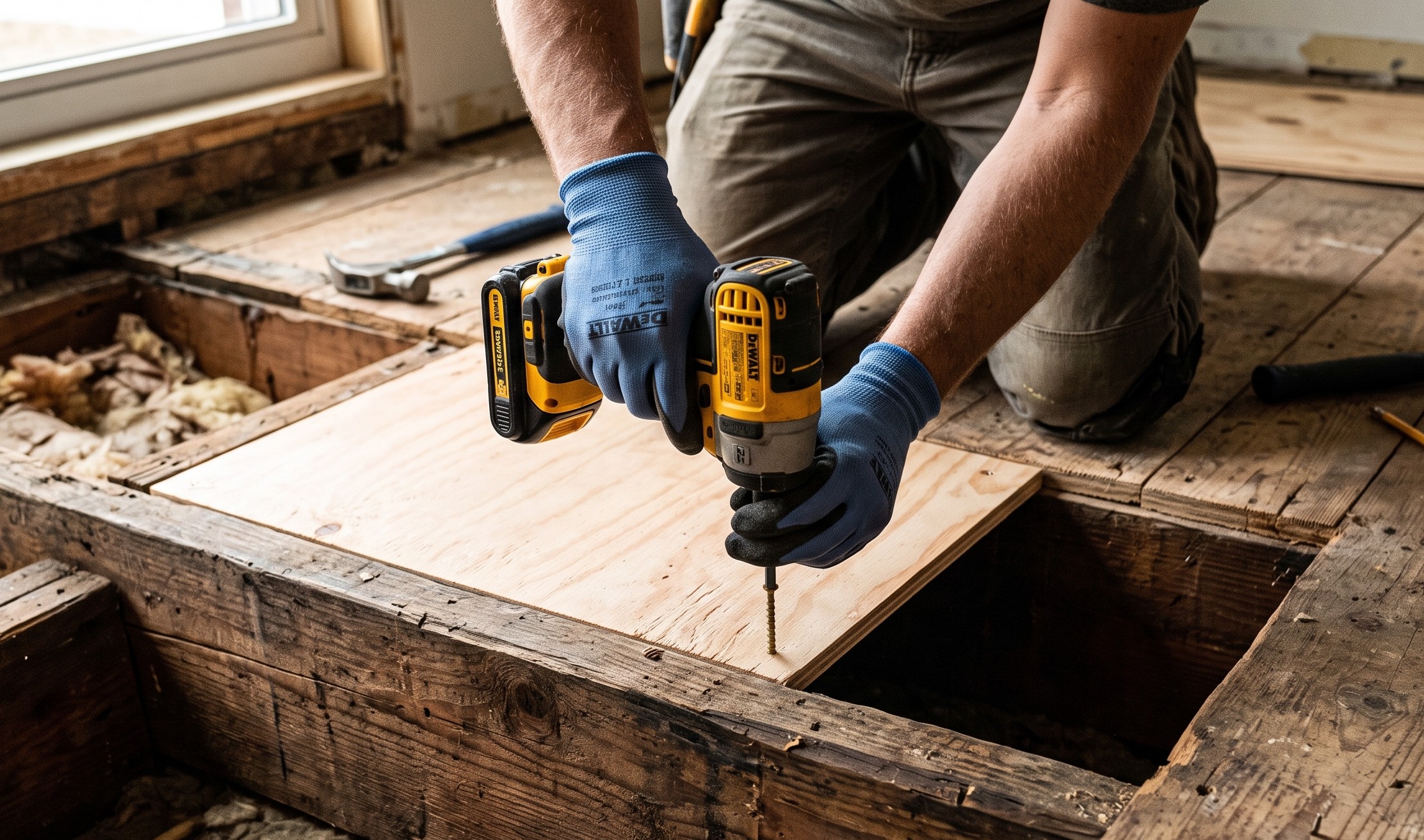
Spongy steps or loud, rhythmic squeaks across your living room floor signal trouble beneath your feet. You might hope a quick layer of new carpet or fresh vinyl plank will cover up the problem, but ignoring those warning signs guarantees failure for your new floor. Covering a compromised subfloor simply hides structural damage that will eventually ruin your investment.
Diagnosing subfloor rot and joist movement helps you fix hidden structural issues before you spend money on new materials.
Subfloor Rot vs. Joist Movement
A floor that flexes, dips, or creaks usually suffers from one of two distinct problems underneath: deteriorated subfloor panels or shifting floor joists. Identifying the specific cause narrows down the exact repair you need.
Wood Rot from Trapped Moisture
Subfloor rot happens when moisture penetrates plywood or old diagonal plank subflooring over an extended period. In older Twin Cities homes, this damage frequently occurs near leaky exterior doors, beneath worn bathroom fixtures, or above damp, unconditioned crawl spaces.
When wood absorbs water repeatedly, the internal fibers break down, softening the panels. Stepping on a rotted subfloor creates a soft, squishy sensation rather than a solid surface. If left untreated, the wood disintegrates, causing nails to pop free and leaving the floor vulnerable to complete structural collapse under heavy weight.
Joist Deflection and Mechanical Squeaks
Joist movement involves the structural framing members supporting your entire floor system. In the 1950s through the 1980s, homes in Roseville, New Brighton, and Fridley, floor joists span long distances over basement support beams. Over decades of daily foot traffic, those wooden joists can sag, twist, or shrink slightly as indoor humidity drops during winter heating seasons.
This movement creates tiny gaps between the top of the joist and the subfloor panel above it. When you walk across the room, the subfloor board flexes downward into that gap and rubs against the shank of loose framing nails. That metal-on-wood friction produces the loud, sharp squeaks you hear every time you step on the spot.
How to Test Your Subfloor Before Installing New Flooring
Investigating what sits underneath your old floorboards prevents costly surprises halfway through an installation. You can run a few simple checks yourself to gauge the condition of your subfloor.
Physical Deflection Test: Walk slowly across your room and pay attention to how the floor reacts under your heel. A healthy subfloor feels completely rigid, while a damaged floor gives way or feels springy under your body weight.
Basement Overhead Inspection: Head down to your unfinished basement or mechanical room with a flashlight to examine the exposed floor joists from below. Look for dark water stains on the underside of the subfloor, white mold growth, or visible gaps between the joists and subfloor panels.
Subfloor Moisture Readings: Professional installers use pin-type moisture meters to check the internal water content of plywood subfloors. Wood moisture levels above 12% indicate active water intrusion that must be dried out and sealed before laying down fresh material.
Repair Options for Damaged Foundations
Fixing a subfloor problem calls for different approaches depending on whether the damage stays localized to the subfloor panels or extends deep into the structural joists.
Panel Replacement for Localized Rot
When moisture ruins a section of plywood, the damaged wood must come out completely. Our installers cut out the rotted section back to the center of the nearest framing joists, inspect the surrounding area for hidden moisture, and screw down a fresh piece of exterior-grade subfloor plywood. We then sand the seams flush so your new surface lies completely flat.
Sistering and Screw Reinforcement for Sagging Joists
Addressing joist deflection needs reinforcing the original framing from underneath. If joists sag or twist, installers sister the structure by bolting a new, straight dimension lumber beam directly alongside the existing joist. To stop persistent squeaks caused by loose nails, we drive heavy-duty wood screws down through the subfloor into the joist below, drawing the two layers tightly back together.
Schedule an Assessment in New Brighton
You do not have to guess whether your subfloor is ready for new carpet, hardwood, or luxury vinyl. Our team evaluates your subfloor during the initial consultation so your project stays on track from start to finish.
If you suspect subfloor issues or want to plan your next room update, stop by our New Brighton warehouse showroom to look at durable flooring options, or contact us today to schedule an evaluation with a local specialist.


