

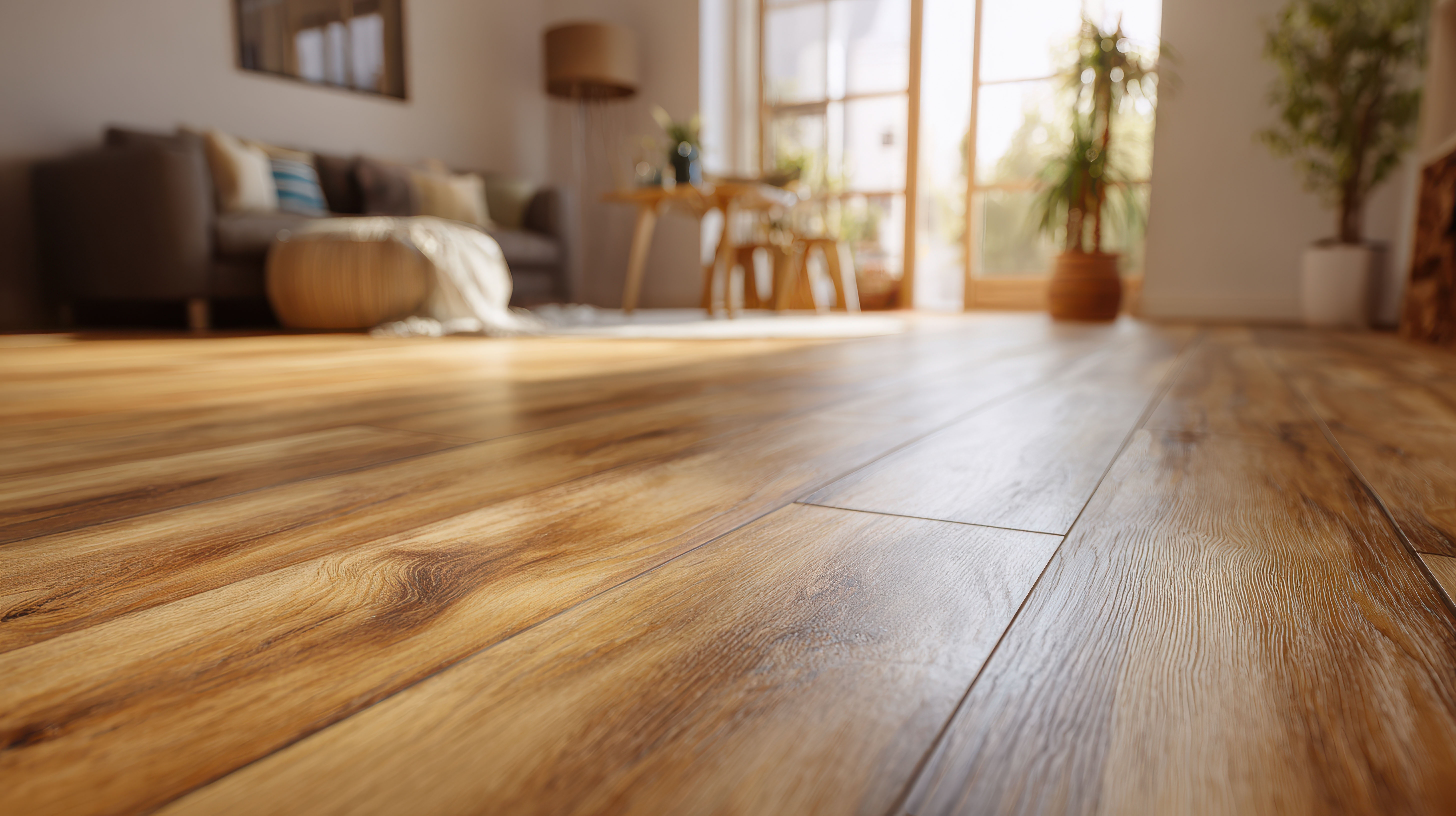
Gaps between your hardwood floorboards are a normal sight every autumn as you begin to run your furnace.
But taking the time to evaluate your hardwood now prevents debris from packing into the open seams and causing permanent wood damage over the winter.
As cooler weather settles into Ramsey and Anoka County, dry indoor air pulls moisture out of your oak, pulling individual boards apart. Spotting the difference between normal seasonal movement and structural failure helps you choose the right fix, whether that means a fast topcoat refresh or individual board repairs.
Why Autumn Heat Triggers Wood Shrinkage
Solid hardwood acts like a natural sponge, expanding in humid July weather and contracting when forced-air heat takes over. In 1950s through 1980s homes throughout New Brighton and Shoreview, original red and white oak floors have undergone decades of this constant seasonal movement.
As hardwood ages, the floorboards lose some of their natural flexibility. When you switch your heat on for the fall, indoor humidity levels drop rapidly. The wood sheds internal moisture and shrinks, which turns tight seams into visible gaps. If these separations open up unevenly, daily household dirt, pet hair, and coarse road salt tracked in from your driveway settle deep into the cracks.
Once winter debris fills those open channels, the wood cannot expand naturally when humid summer weather returns. Instead of flattening out, the expanding floorboards crush against the trapped dirt, resulting in chipped edges, splintered wood, or permanent board cupping.
Normal Seasonal Gapping vs. Structural Wear
Every natural wood floor experiences a small amount of movement as the seasons change. Knowing the difference between normal shrinkage and real floor failure keeps you from overreacting to harmless gaps while catching serious issues early.
Hairline gaps that measure less than the thickness of a dime are standard during dry Minnesota cold snaps. These tiny openings spread evenly across your entire floor and close back up on their own by late spring. You can minimize this movement by maintaining an indoor relative humidity level between 35% and 45% using a whole-home humidifier.
Gaps wider than an eighth of an inch, or openings that remain visible through the middle of summer, signal physical floor failure. Wide separations often mean the original flooring nails have worked loose from the subfloor joists underneath, or the tongue-and-groove locking edges between boards have cracked under stress.
Avoid Store-Bought Wood Putty and Caulk
Squeezing colored caulk or wood putty into fall gaps seems like an easy fix, but it usually ruins the floorboards by next summer.
Store-bought wood fillers dry into a hard, rigid mass that cannot flex. When warm, humid weather returns next summer, your oak planks naturally expand back to their original size. Because the hardened putty blocks the gap, the swelling boards crush together with extreme force. That sideways pressure forces the edges of your floorboards upward, creating raised ridges that demand heavy sanding to fix.
Professional Solutions to Protect Hardwood Before Winter
Addressing wide gaps in early fall gives our team the chance to stabilize your floor before sub-zero temperatures arrive.
Dust-Contained Screen-and-Recoat Maintenance
If your oak shows minor, uniform gaps alongside general surface scuffs, a dust-free screen-and-recoat restores your protective barrier. We lightly buff the top layer of polyurethane with an abrasive mesh screen to remove surface haze without stripping away the original timber. We then spread a fresh coat of commercial polyurethane across the entire room. This finish coats the exposed shoulders of the wood, sealing the open seams against winter spills, melting snow, and dirt buildup.
Targeted Board Repairs and Custom Splines
Wider gaps in high-traffic entryways, hallways, or living rooms usually point to shifting subfloor panels or broken floorboards. For these deeper problems, our crew removes the compromised pieces and installs matching replacement oak boards straight from our local warehouse inventory. We lock the new wood securely into the surrounding floor and apply custom stains to blend with your aged oak, keeping the surface tight, flat, and stable for years to come.
Schedule Hardwood Maintenance in New Brighton
You do not have to wait for winter drafts and driveway salt to damage your original wood floors. Our team brings over 40 years of local experience solving Minnesota climate and subfloor challenges, helping you protect your living space before the freeze sets in.
If you notice wide gaps between your floorboards or want to refresh your protective topcoat, stop by our New Brighton showroom, or contact us today to set up an in-home hardwood evaluation with an expert.


