

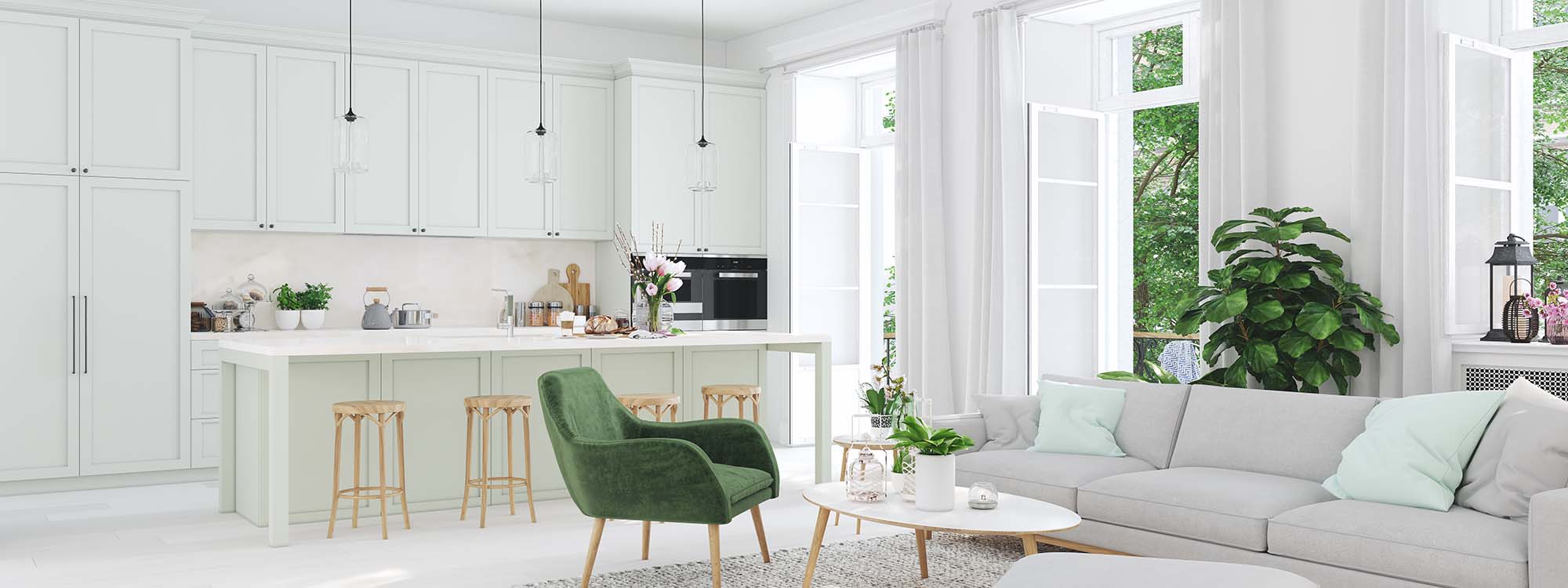
The open-concept layout has been a staple of home design for years, letting natural light reach deeper into the home and making even a modest footprint feel expansive. However, living in one giant, undivided room presents a unique challenge: without walls, the purpose of a space can become muddled. A dining room can easily bleed into the living room, leaving the whole area feeling like a disorganized hall rather than a functional home.
In 2026, designers are solving this by moving away from uniform flooring across the entire main level. Instead, they are using "mixed media" flooring—strategically combining luxury vinyl plank (LVP) and high-performance carpet—to create visual boundaries that act like invisible walls.
Defining Zones with Material Shifts
Defining a room's purpose often comes down to the material under your feet. Walking from a hard, smooth surface onto a soft, textured one causes an instant mental shift in how the space is used. This is called "visual zoning."
A common application in New Brighton homes is the transition from a dining area to a seating area. LVP is the practical choice for the dining area because it handles the weight of a heavy table and the inevitable spills from dinner. However, continuing that same hard surface into the living area can make a large room feel cold and echoey. Transitioning to a plush, patterned carpet in the seating area creates a conversation zone feel that invites relaxation without needing to build a single partition.
The Designer Inset: The "Permanent Rug" Look
One of the most sophisticated ways to use mixed media is the "inlay" or "inset" technique. This involves installing LVP around the perimeter of the room and "insetting" a section of carpet in the center of the living area.
This approach offers the luxury of a high-end area rug without the maintenance headaches. Because the carpet is physically tucked and finished against the LVP, there are no corner curls, tripping hazards, or rugs sliding around under the weight of a sofa. It creates a frame for furniture that looks intentional and custom-built for the house.
Achieving a Seamless Transition
The key to a successful mixed-media floor is ensuring the transition is flush. If the carpet sits significantly higher than the LVP, it creates a tripping hazard and a break in the visual flow.
Since carpet and its padding are typically thicker than a standard LVP plank, professional installation involves prepping the subfloor to bridge the height gap. This often means installing specific underlayments, shims, or a thin layer of secondary subflooring beneath the vinyl side. Raising the LVP to match the carpet's elevation ensures the two materials meet at an identical height. When done correctly, the transition feels smooth underfoot and displays a clean, professional line rather than a bulky transition strip.
Coordinating Your 2026 Palette
For 2026, the trend for mixed-media floors is rooted in "tonal harmony." Designers are moving away from high-contrast pairings, like dark wood-look LVP next to bright white carpet. Instead, the focus is on materials that share the same warm, earthy undertones.
A natural, honey-toned oak LVP pairs beautifully with a taupe or "greige" textured carpet. This subtle shift in texture provides the zoning you need while keeping the overall space feeling cohesive and calm. Patterned carpets with subtle geometric weaves are also gaining popularity for inlays, adding a layer of sophistication that breaks up the flat look of the hard planks.
Finding the Balance in Your Home
The most successful open-concept designs treat the floor as an architectural element. By choosing where the hard surface ends and the soft surface begins, you take control of how you move through and experience your home.
Explore Your Design Options at Cap Carpet & Flooring
Seeing how these materials look side-by-side is the best way to visualize your new layout. Our showroom features the latest 2026 collections, allowing you to pair different LVP grains with high-performance carpet textures to find the perfect match for your style.
At Cap Carpet & Flooring, we can help you create the perfect open-concept for your home. We invite you to browse our showroom to see these mixed-media pairings in person, or contact us to begin your next flooring project.


