

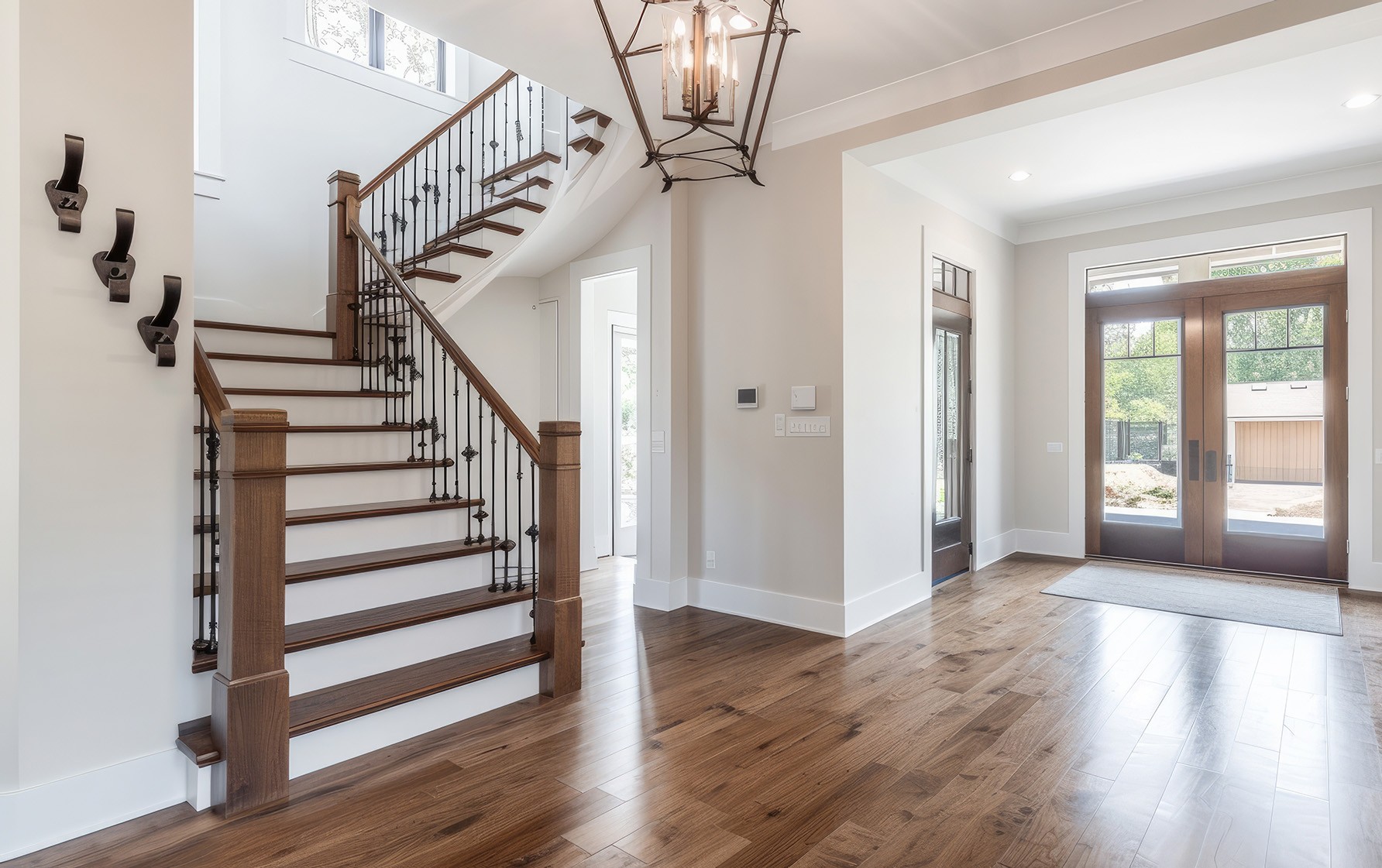
Dark espresso and reddish-brown finishes defined Twin Cities interior design throughout the 1980s. In suburban neighborhoods across Shoreview and Arden Hills, classic homes from this era still feature original oak hardwood flooring hidden under heavy coats of dark stain and high-gloss clear coats. When you are renovating your main living spaces, these heavy finishes absorb natural daylight and make your rooms feel closed in.
Refinishing your existing oak hardwood flooring through dust-contained sanding removes those dated surface pigments, allowing you to brighten your home with warm honey or amber tones without replacing the solid wood beneath your feet.
Removing Deep 1980s Stains from Aging Oak
Many people planning a remodel wonder if dark stain penetrates too deeply into the wood fibers to ever come out completely. Over forty years of foot traffic, moisture, and sunlight can make old stain look permanent, but original red oak and white oak floors have plenty of thickness left for complete restoration.
The dark pigments used in 1980s homes sit primarily in the top wear layer of the wood and within the old protective finish. Because solid oak hardwood flooring can be sanded multiple times over its lifespan, a professional crew can strip away the dark surface color to expose the fresh, light timber below. Sanding down to the bare grain removes old traffic patterns, surface scratches, and yellowed topcoats, creating a completely clean canvas for a lighter, modern finish.
The Dust-Contained Sanding Process
Stripping heavy stain and thick topcoats off solid oak hardwood flooring needs precision commercial equipment and careful technique. Older sanding methods filled houses with airborne wood dust, but modern refinishing uses contained systems connected to high-powered vacuums parked outside your home.
Multi-Grit Sanding Down to Raw Timber
Our crew begins the sanding process using coarse abrasive paper to grind through old coats of polyurethane and pull heavy dark pigment out of the open oak grain. Installers move systematically across the room, transitioning from coarse grits down to fine abrasive screens. This multi-pass sanding levels out uneven board edges, removes deep surface gouges, and smooths seasonal board movement. Once the final sanding pass wraps up, the pale, natural grain of your local oak hardwood flooring stands completely bare and ready to accept new color.
Stain and Finish Testing on Your Actual Floorboards
Wood absorbs color differently depending on whether your home has red oak or white oak hardwood flooring. Red oak carries natural pink and salmon undertones, while white oak features cooler brown and tan tones that influence how pigments look in your living room. Instead of having you guess your color from small paper brochures, our refinishing crew applies real test patches of light stains, clear sealers, and warm amber tones directly onto your freshly sanded floor. You can see how each option interacts with your home's natural daylight, wall colors, and evening lighting before making a final decision.
Choosing Natural Honey and Amber Finishes for Oak
Moving away from heavy dark stains allows you to highlight the authentic grain structure of your oak hardwood flooring with lighter, more versatile finishes.
Clear Water-Based Polyurethane for Honey Tones
Water-based commercial sealers provide a clean, modern look over bare red and white oak. Unlike old oil-based finishes that turn yellow or amber over time, water-based polyurethane dries crystal clear. Applying clear coats directly over raw oak highlights the natural honey tones of the wood, keeping your rooms bright and airy while providing tough daily protection against spills and scuffs.
Warm Amber and Neutral Stains for Classic Character
If you want a traditional look that softens prominent grain patterns, light neutral stains and amber sealers offer balanced warmth. These lighter formulas bring out the rich texture of the wood without making your rooms feel dark. Light amber tones pair naturally with painted kitchen cabinetry, white trim work, and modern furnishings, giving your updated space a warm, cohesive look that honors the architectural character of your home.
Refinishing Oak Hardwood Flooring in New Brighton
You do not have to tear out your original oak hardwood flooring to get the light, open look you want for your home. Our team brings more than 40 years of local sanding and refinishing experience to every project, helping you restore the beauty of your existing wood floors during any home renovation.
If you are planning to update dark 1980s hardwood flooring, visit our New Brighton showroom to look at modern finish samples, or contact us today to set up an in-home assessment.


