

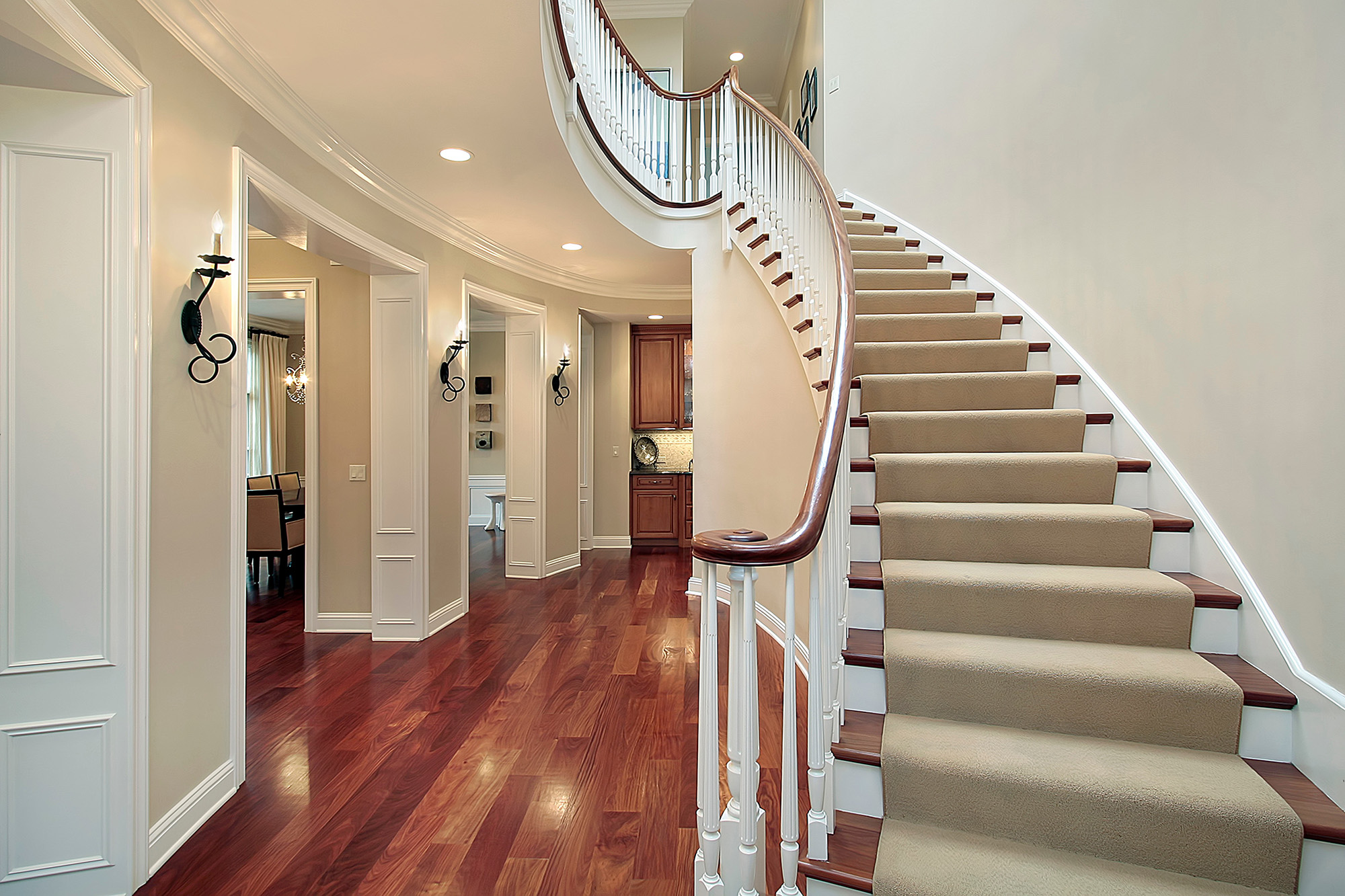
A beautifully chosen stair runner can turn a staircase into a defining feature of your home. In New Brighton, MN, where traditional interiors, established homes, and updated family spaces often combine classic details with modern finishes, the right carpet pattern can add warmth and character without hiding the beauty of your stairs. Curved and L-shaped staircases, however, require extra planning because their changing angles can make stripes, geometric designs, and repeating motifs harder to align.
At CAP Carpet & Flooring, we help you consider pattern, color, and installation details to create a polished result.
At a Glance
Curved and L-shaped staircases require careful pattern alignment at turns and landings.
Stripes and small repeating motifs can be easier to coordinate than large geometric patterns.
Carpet scale, runner width, and staircase measurements influence the finished appearance.
Professional installation and design guidance help create a consistent look across every step.
Why Stair Runner Pattern Matching Matters
Stair runners provide a carpeted walking surface while leaving some of the underlying hardwood visible. They can soften footsteps, add texture, and introduce color to a hallway or entryway.
On a straight staircase, a repeating pattern can often continue relatively predictably from one tread to the next. Curved stairs and L-shaped staircases are more complicated. Winder steps change direction, while landings create transitions that can interrupt a pattern.
If the design shifts noticeably at these points, the staircase may look uneven even when the carpet itself is attractive. Good pattern planning helps the finished runner feel intentional from the first step to the upper landing.
Choosing Patterns for Curved Staircases
Curved staircases have treads that gradually change angle, making pattern placement especially important. With stair runner pattern matching for curved stairs, your installer must account for the shape of each tread and the way the carpet follows the staircase.
Stripes for a Classic Look
Narrow stripes can complement traditional woodwork, painted balusters, and natural hardwood treads. When centered carefully, they create a clean visual line along the stairs. However, stripes may appear to angle or shift around a curve, so precise positioning is essential.
Small Repeating Motifs
Small-scale patterns, such as subtle diamonds or repeating woven designs, can be forgiving on curved steps. Minor variations in alignment may be less noticeable than they would be with large, high-contrast shapes.
Larger Geometric Designs
Bold geometric patterns can make a staircase a focal point, but they require more detailed planning. The installer may need to balance the pattern across multiple treads while managing changes in direction and carpet placement.
The Best Stair Runner Patterns for L-Shaped Staircases
L-shaped staircases typically turn at a landing or use winder steps to change direction. The challenge is maintaining a pleasing visual connection between the lower flight, the turn, and the upper flight.
The best stair runner patterns for L-shaped staircases often include subtle herringbone, small-scale geometrics, textured solids, and restrained stripes. These designs can create continuity without making every transition a focal point.
For a landing, your installer should plan how the pattern meets the adjoining staircase. Depending on the carpet design and layout, the pattern may continue consistently, be repositioned for the new direction, or use a carefully planned transition.
In New Brighton homes with traditional trim or hardwood stair edges, a runner in a warm neutral, muted blue, or understated charcoal can complement existing finishes while keeping the staircase visually balanced.
Match the Carpet to Your Home and Daily Routine
Your staircase should look good while standing up to everyday use. Minnesota winters bring wet boots, tracked-in grit, and seasonal dirt, particularly near busy entrances. A durable carpet with a suitable construction and a practical color can help your runner maintain its appearance.
Consider how much traffic your stairs receive, whether you have pets, and how the runner will coordinate with nearby flooring. A textured pattern may help disguise everyday marks, while a simple design can work well when you want your woodwork to remain the main attraction.
Explore our carpet flooring options to consider different colors, textures, and patterns. Working with a skilled flooring designer can help you coordinate the runner with your hallway, wall colors, and existing hardwood.
Why Professional Measurement and Installation Matter
Custom stair runners in Minnesota need more than a standard carpet measurement. Each tread, riser, curve, and landing must be evaluated so the runner fits properly and the pattern looks balanced.
Professional installation also helps ensure suitable attachment, secure edges, and a consistent finish. Ask about the proposed seam placement, pattern repeat, and how the design will be handled at turns before work begins.
Our residential flooring installation services can help you explore the installation process for your project.
Plan Your Stair Runner Project With Financing in Mind
A custom runner's cost depends on the carpet you choose, staircase dimensions, pattern complexity, and installation requirements. Planning these details early helps you compare options and establish a realistic budget.
To explore available options, learn more about our financing options, subject to credit approval.
Create a Staircase That Feels Finished
The right stair runner combines visual appeal, everyday comfort, and careful pattern placement. Whether your New Brighton home has a graceful curved staircase or an L-shaped layout, thoughtful carpet selection and professional installation can make the transition between floors feel seamless.
At CAP Carpet & Flooring, we can help you compare patterned stair runners and find a design that suits your home. Contact our team to discuss your staircase, explore custom options, and take the next step toward a runner that complements your home's character.


