

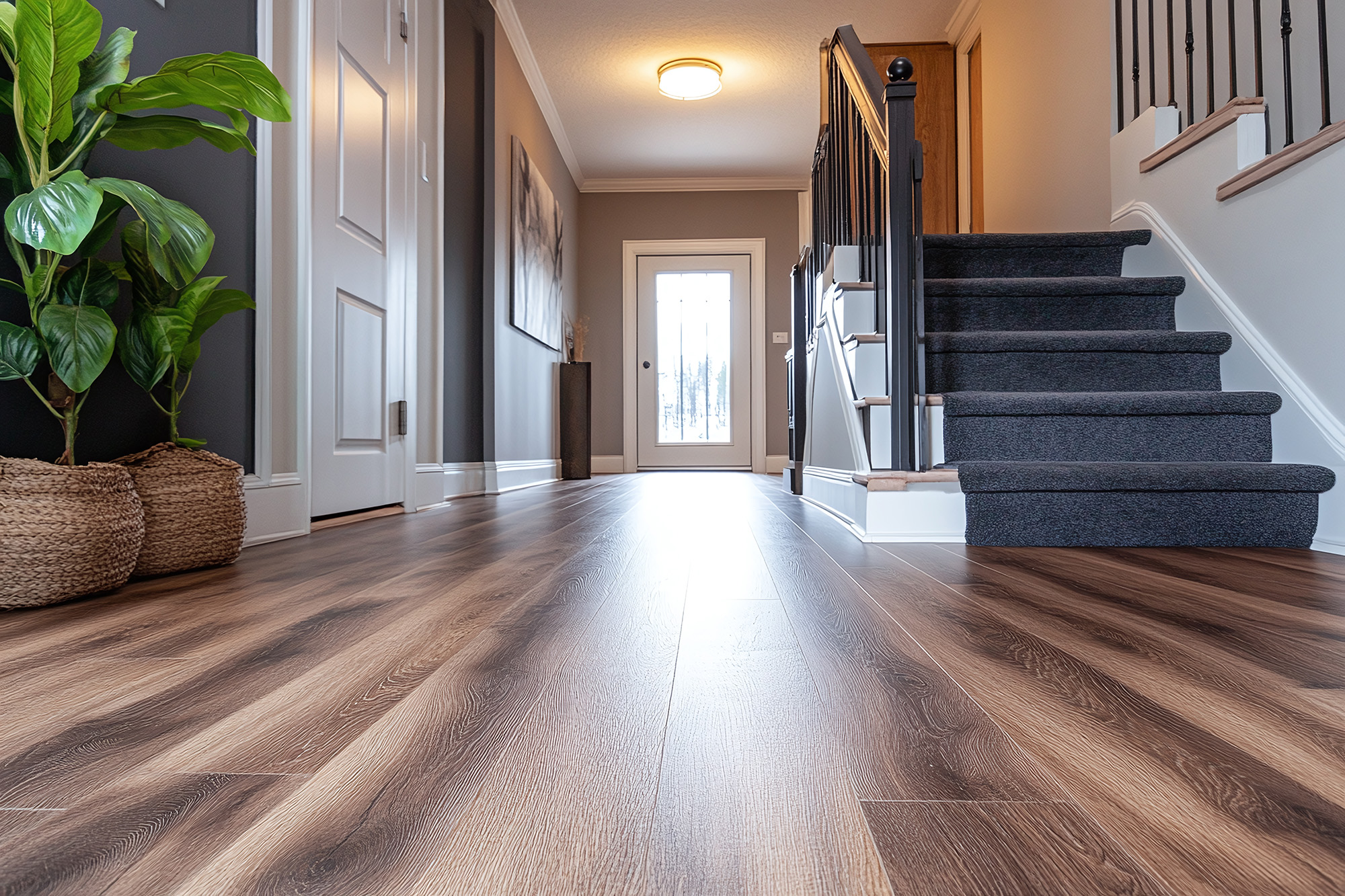
Walking into a flooring showroom often feels like stepping into a sea of identical-looking planks. Most people start their search by looking at colors and grain patterns, which is a great place to begin.
However, the long-term success of your renovation depends on the specific construction of those planks. Understanding the differences between luxury vinyl plank (LVP), Enhanced Vinyl Plank (EVP), and engineered hardwood helps you choose a product that actually stands up to your daily life.
SPC vs. WPC
When people talk about modern vinyl flooring, they are usually discussing the "core" of the plank. This is the rigid center that provides stability and strength. Most high-quality LVP today uses an SPC (Stone Plastic Composite) core. SPC is made with a mixture of limestone powder and stabilizers that creates a very thin, incredibly dense, and heavy plank. Because it is so hard, SPC is the best defense against heavy furniture or the high-heeled shoes that might leave a dent in softer materials.
On the other hand, EVP features a WPC (Wood Plastic Composite) core, which is made of recycled wood pulp, plastic, and a foaming agent. The foaming agent introduces tiny air pockets into the core, making the floor feel significantly softer and warmer under your feet. If you spend hours standing in the kitchen, your joints will appreciate the extra "give" that a WPC core provides.
The Reality of Engineered Hardwood
Engineered hardwood occupies a different category entirely. While vinyl uses a high-definition photographic layer to mimic wood, engineered hardwood uses a genuine slice of timber—called a wear layer—bonded to a stable base of plywood or high-density fiberboard.
You get the authentic variation of natural knots and grain patterns that only real wood provides. Because it is built in layers, it is far more stable than traditional solid hardwood, making it less likely to warp or gap during the humid Minnesota summers or dry winters. While it is durable, it does require more care regarding spills and moisture than vinyl products.
The Basement Environment: Moisture and Comfort
Basements in New Brighton present two specific hurdles: moisture from the concrete slab and naturally lower temperatures. For these spaces, EVP (WPC) is often the favorite choice. Since it is entirely waterproof, you don't have to worry about a damp slab causing the floor to rot or buckle. Additionally, those air pockets in the foamed core act as an insulator. They create a thermal break between the cold concrete and your feet, making the basement feel much more like a cozy living space.
LVP (SPC) also works well in basements because it is waterproof. However, because the stone core is so dense, it will feel as cold as the concrete beneath it unless you install a high-quality underlayment.
The Sunroom Challenge: Heat and UV Exposure
Sunrooms and three-season porches face intense, direct sunlight that can cause surface temperatures to skyrocket. This heat can cause many flooring materials to expand, leading to "peaking" at the seams or even buckling.
In these high-heat areas, LVP with an SPC core is the clear winner. The limestone-based core is "dimensionally stable," meaning it barely moves when the temperature rises. EVP and even some engineered hardwoods can struggle in these environments. The foaming agents in WPC can soften under extreme heat, and the natural wood in engineered products can dry out or fade if they aren't specifically rated for high UV exposure.
Finding the Right Fit for Your Home
Successful flooring projects rely on matching the internal construction of a plank to the specific environment of your room. The structural makeup of the product dictates how it handles your home's unique conditions over the next decade. If you are finishing a basement and prioritize warmth, the foamed core of an EVP provides the insulation you need. For a sun-drenched porch, the stone-core stability of an SPC-based LVP ensures the floor stays flat and beautiful. In your main-floor living areas, engineered hardwood provides the distinct character and long-term resale value that only real timber can offer.
Start Your Project at Cap Carpet & Flooring
Nothing beats holding a sample in your hand to feel the weight of a stone-core LVP or the texture of a real wood wear layer. Seeing these differences in person clarifies which technology is right for your home.
At Cap Carpet & Flooring, we’ve helped New Brighton homeowners navigate these choices for years, and we’d love to help you find the perfect match for your home. Stop by our showroom to browse our latest collections, or contact us to begin your next flooring project.


