

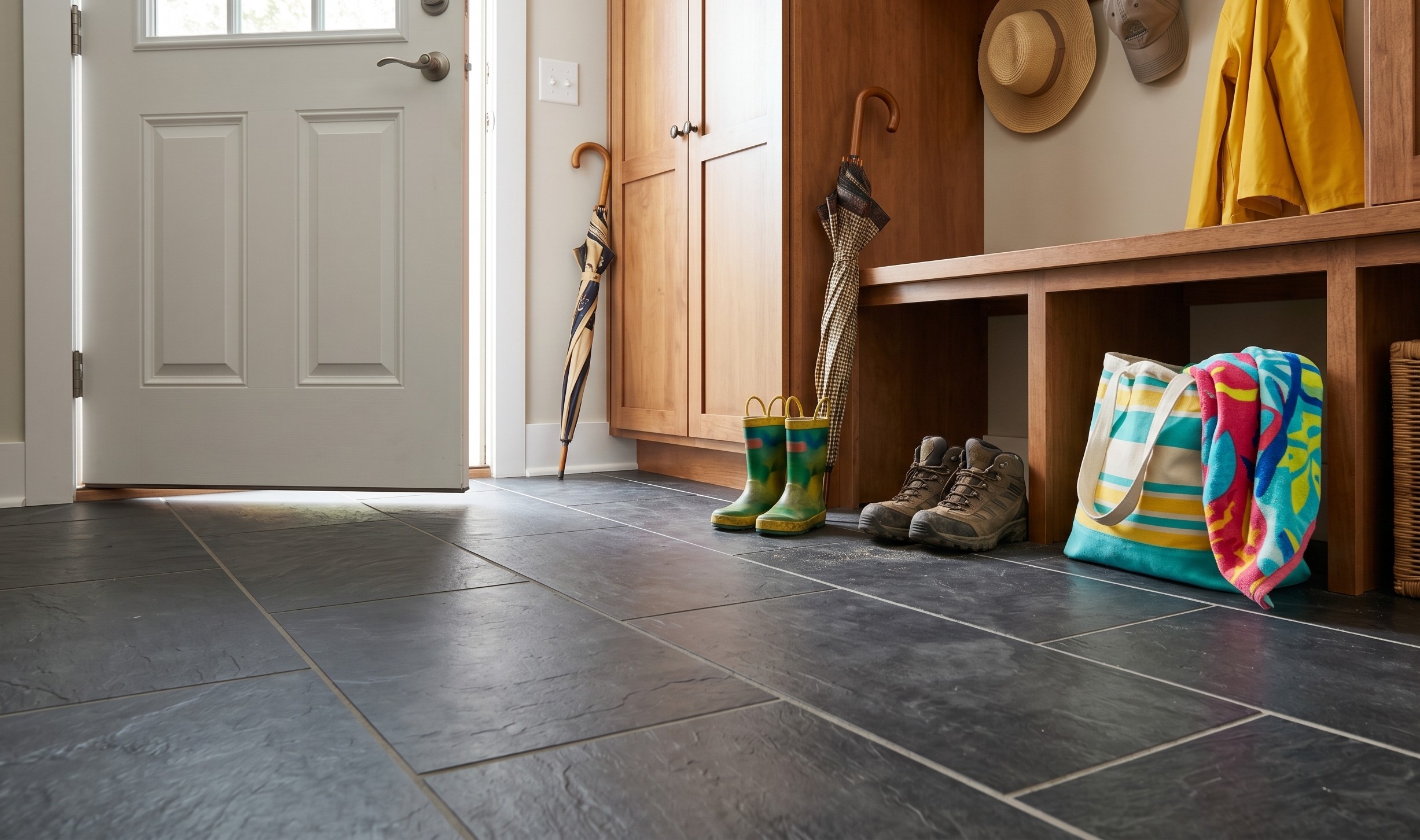
Minnesota summers are fast-paced and active. Over the course of a few short months, our mudrooms and entryways transform into the busiest zones in the entire house. Between neighborhood barbecues, construction work, and weekend trips to the lake, these small spaces handle an incredible amount of foot traffic.
Unfortunately, that outdoor lifestyle brings the outdoors inside. Entryways across the Twin Cities metro area take a beating from June through August as family members track in abrasive lake sand, gravel from local bike trails, and water from wet towels or rainstorms. To keep your home clean and protected, your entryway floor needs to act as a durable barrier. Upgrading to high-performance luxury vinyl tile (LVT) is an excellent way to handle the chaos, provided you choose the right material specifications.
Understanding the Wear Layer: Why 20 mil is the Standard
When you look at luxury vinyl flooring, you are actually looking at a layered product. The topmost layer is a clear, protective coating called the wear layer. This layer sits directly above the decorative print film and shields it from daily damage. Homeowners often confuse the wear layer with the overall thickness of the plank, but they are completely different measurements. The wear layer is measured in mils, which represents one-thousandth of an inch.
For a low-traffic guest bedroom, a lower mil rating works perfectly fine. But for a hardworking Minnesota mudroom or backdoor entry, you need a commercial-grade threshold. A 20 mil wear layer is the benchmark for high-traffic zones. This thickness provides the heavy-duty scratch and scuff resistance necessary to withstand ground-in dirt, heavy work boots, and pet claws. Choosing a 20 mil layer ensures that abrasive grit will not grind through the protective surface and ruin the look of your floor over time.
Why Inorganic, Waterproof Cores Matter for Transition Zones
The top surface is only half the battle. Entryways and transition zones also face a constant threat from trapped moisture. Wet swimsuits dropped on the floor, muddy shoes left by the door, or a dripping cooler can quickly ruin lesser materials. The secret to a long-lasting mudroom floor lies hidden inside the center of the plank: the core material.
Older laminates and cheaper vinyl options often use cores made with compressed wood fibers or organic fillers. When water seeps between the seams of those products, the organic materials act like a sponge, causing the edges to swell, warp, and eventually harbor mold.
High-performance LVT utilizes an inorganic, rigid core—often referred to as stone plastic composite (SPC). Because these cores are constructed entirely from limestone and stabilized polymers, they contain zero wood components. They cannot absorb water, no matter how long a wet pool sits on the surface. An inorganic core guarantees that your floor stays flat, stable, and structurally sound through every summer storm and lake trip.
Preparing Your Mudroom for Summer Traffic
Getting an entryway floor that can survive a busy Minnesota summer requires a combination of heavy-duty product specifications and a precise installation. Entryway subfloors are often uneven, especially in older homes or transition zones leading out to a garage or deck. If the subfloor is not properly leveled, even the strongest rigid core plank can experience unlocked seams over time.
Our professional installation teams take care of all the necessary preparation work before a single plank goes down. We pull up your old flooring, inspect and level the subfloor, and ensure your new high-performance LVT is locked tightly from wall to wall. We handle every step of the logistics, so your new entryway is completely sealed, durable, and ready to stand up to decades of heavy foot traffic.
If you want to upgrade your mudroom, contact us today to discuss your project, or stop by our warehouse showroom.


