

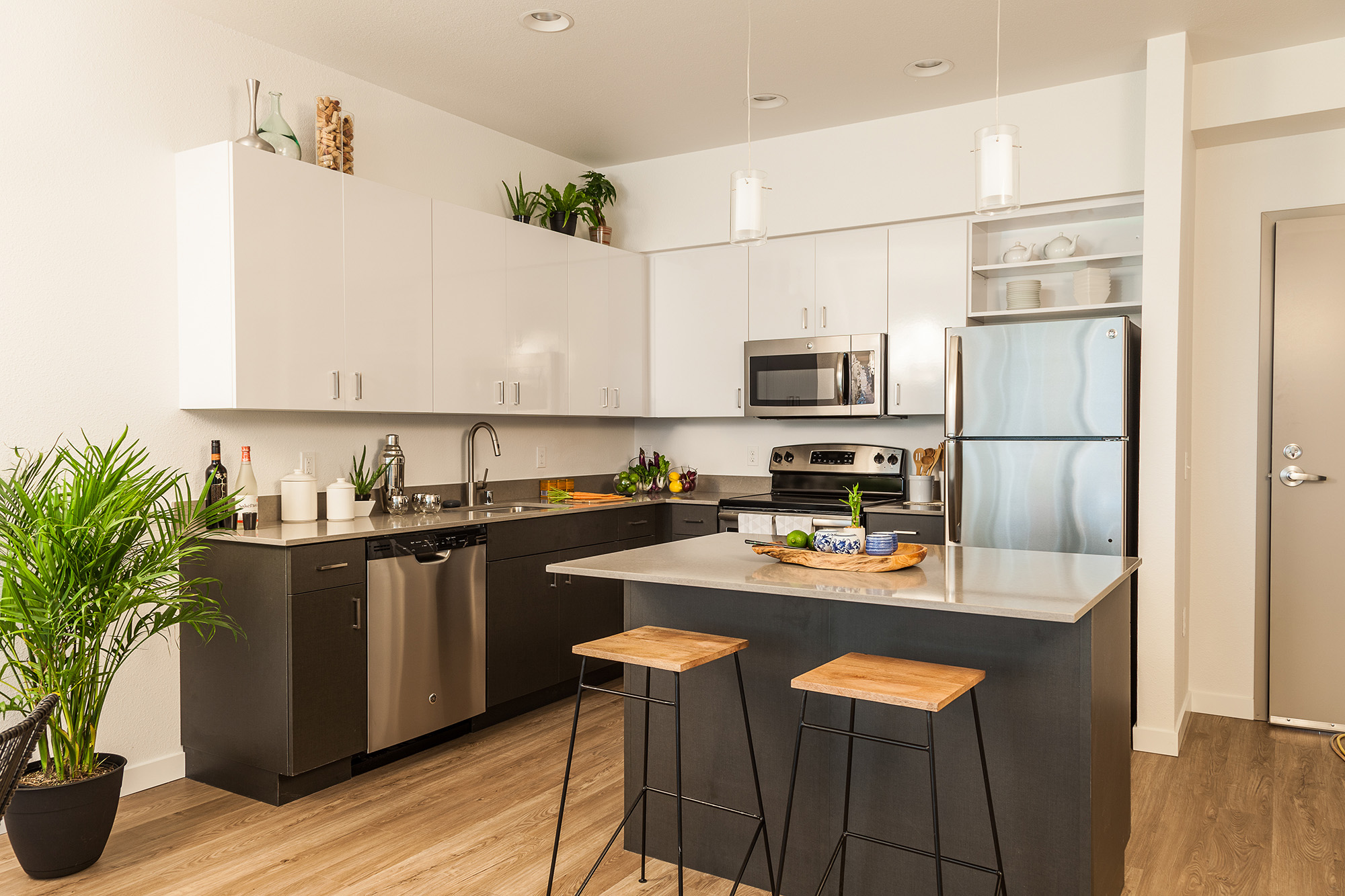
Kitchens and laundry rooms are the most demanding environments in any home. Between the weight of heavy appliances, constant foot traffic, and the ever-present risk of moisture, the flooring in these spaces has to work harder than anywhere else. When browsing for new materials, the terms water-resistant and waterproof are often used interchangeably.
But understanding the technical gap between the two is the difference between a floor that lasts decades and one that fails after a single appliance leak.
Understanding the Limits of Water-Resistant Flooring
Water-resistant flooring is designed to provide a temporary barrier against moisture. The goal of this technology is to keep liquids on the surface long enough for a person to find a towel and wipe them up. This protection usually comes from a combination of a durable top wear layer and a tight locking system that prevents water from immediately seeping into the seams.
The vulnerability of water-resistant flooring lies in its core. Most products in this category, such as traditional laminate, feature a high-density fiberboard (HDF) core. Because HDF is made of compressed wood fibers, it remains organic and porous. If moisture manages to bypass the surface—whether through a perimeter edge or a seam that has slightly gapped over time—the core will absorb that liquid like a sponge. Once the wood fibers inside the board swell, the edges of the planks often begin to peak or curl upward. This type of damage is structural and cannot be sanded down or reversed; once the core is compromised, the affected planks typically need to be replaced.
The Engineering Behind Enhanced Vinyl Plank (EVP)
Enhanced Vinyl Plank, commonly known as EVP, was engineered specifically to solve the limitations of wood-based cores. The enhanced designation refers to the rigid, inorganic core tucked beneath the decorative vinyl layer. This core is typically made of either Stone Polymer Composite (SPC) or Wood Polymer Composite (WPC).
In an SPC floor, a blend of limestone and stabilizers creates a dense, stone-based center. Since the middle of the plank contains no organic wood fibers, the material cannot absorb moisture or swell. Relying on inorganic materials is the primary reason these products carry a waterproof rating, as the physical structure of the board won't break down if it gets wet. In a kitchen, a dishwasher leak that goes unnoticed for a few hours is still a problem, but a stone-core floor won't rot or warp while you deal with the repair. You still need to dry the area to protect your subfloor and cabinets, but the flooring itself stays intact throughout the process.
Durability for High-Traffic Kitchens and Laundry Rooms
Moisture is only half the battle in a kitchen or laundry room. These floors also have to withstand the static weight of a refrigerator or a heavy cast-iron stove. Standard flexible luxury vinyl can sometimes telegraph imperfections from the subfloor or dent under heavy loads. The rigid core of EVP acts as a bridge over minor subfloor divots and provides the compressive strength needed to support large appliances without the joints separating.
The density of a stone-polymer core keeps your flooring planks firmly in place and resists shifting. This stability is important because the constant vibration of high-speed spin cycles can rattle thinner, more flexible materials until the locking joints loosen. You also get protection from the chemical side of the room. A quality wear layer ensures that a stray drip of detergent or a splash of bleach won't leave a permanent mark on the finish, making cleanup a simple task.
Managing Expectations for Waterproof Materials
While the planks themselves are waterproof, it is vital to distinguish between a waterproof material and a waterproof room. Even with a high-end EVP installation, the subfloor beneath the planks remains vulnerable. If a pipe bursts or a significant amount of water spills, the liquid can still travel to the edges of the room and seep under baseboards or through the perimeter expansion gaps.
No flooring material can protect a home's wooden joists or subfloor from a catastrophic flood. The primary benefit of EVP is that the floor itself will not be ruined by the moisture. In many cases, if a leak is caught in time, an EVP floor can even be carefully uninstalled, the subfloor dried out, and the same planks reinstalled. This is a possibility that simply does not exist with water-resistant, wood-core products.
Finding Flooring That Handles Your Daily Routine
Choosing the right material for your kitchen or laundry room is about managing the what-ifs of homeownership. While water-resistant floors offer a degree of protection for spills in a dining room, the high-stakes environment of a wet zone usually demands the stability of a rigid, inorganic core.
At CAP Carpet & Flooring, we believe in showing you exactly what goes into the products we sell. We can walk you through the differences between SPC and WPC cores so you can feel the density and see the construction for yourself. If you are planning a project in New Brighton or the surrounding metro area, stop by our showroom to see how EVP can provide the durability and moisture protection your home needs.


